


Are High-Mileage Tyres Worth the Extra Upfront Cost for Delivery Riders?
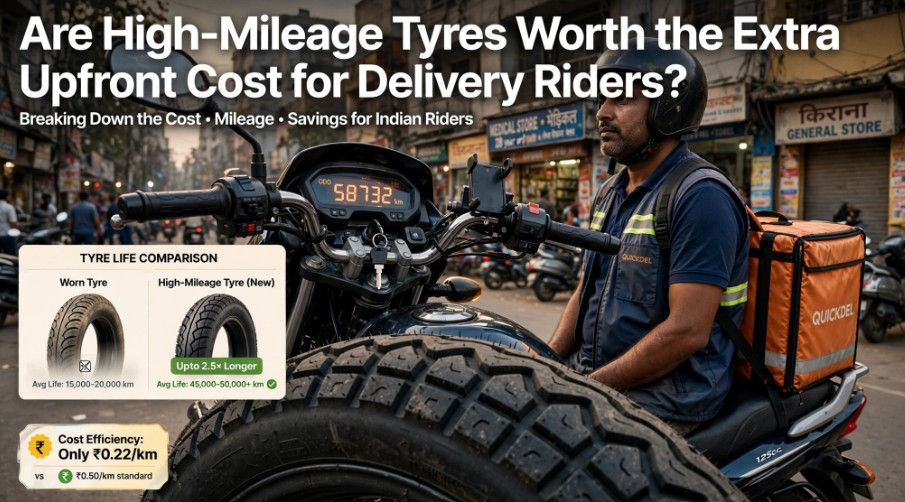
Have you ever replaced a motorcycle tyre sooner than expected and wondered how much that cycle is costing you? For delivery riders, tyres are working assets, not occasional purchases. A lower purchase cost can look attractive, but frequent replacements may raise expenses. High-mileage tyres promise longer service life, yet they usually cost more at first.
The real question is whether that extra spend delivers better value without sacrificing the grip, comfort, and confidence needed during daily delivery runs.
Why Is Delivery Riding Tough On Tyres?
Delivery motorcycles often cover far more kilometres than bikes used mainly for personal trips. A rider may spend several hours on the road, with repeated stops, starts, turns, and braking. That routine puts steady stress on both tyres.
Potholes, speed breakers, rough patches, hot roads, and sudden braking can accelerate wear. Carrying parcels or food adds load, which can increase heat and pressure on the tyre.
This is why the cheapest motorcycle tyre price does not always mean the lowest running cost. A tyre that wears quickly may need replacement sooner, so the rider pays again and loses working time.
Why Does Tyre Wear Matter So Much For Delivery Riders?
Tread is the patterned rubber that stays in contact with the road. As tread wears down, the tyre has less depth available to channel water and maintain dependable road contact in wet conditions.
For a delivery rider, tyre condition can affect:
Braking confidence during sudden traffic changes.
Grip on wet or uneven roads.
Stability while carrying a load.
Steering response through frequent turns.
The number of working kilometres between replacements.
Tyre wear is more than a maintenance issue. It can affect earnings, riding confidence, and operating costs.
What Makes High-Mileage Tyres Different?
High-mileage tyres are designed to deliver a longer service life. Manufacturers can achieve this through tread design, rubber compounds, carcass construction, and design choices.
A harder-wearing compound can resist abrasion for longer, but durability should never be judged alone.
Delivery riders still need predictable grip, braking performance, comfort, and stability.
Longer Life Or Better Grip?
It should not be treated as a choice between durability and grip. A suitable delivery tyre needs a sensible
balance.
Look for a tyre that suits:
The motorcycle manufacturer’s recommended size.
Typical distance.
Regular load carried.
Road and weather conditions.
Riding style and speed.
Expected tread life.
A high-mileage claim has little value if the tyre does not suit the motorcycle or the rider’s use.
Do High-Mileage Tyres Save Money Over Time?
The purchase bill tells only part of the story. Riders should think about cost per kilometre rather than focusing only on the initial motorcycle tyre price.
Consider an example. Tyre A costs within a lower price band but lasts fewer kilometres. Tyre B sits in a higher price band and provides more kilometres under similar riding and maintenance conditions. Tyre B may deliver a lower cost per kilometre despite the higher initial spend.

Actual tyre life varies with load, pressure, roads, riding habits, maintenance, and motorcycle type. Treat mileage claims as guidance rather than a guaranteed result.
Choosing The Right Tyre For Delivery Riding
Start with the motorcycle manufacturer’s tyre specification. Correct tyre size matters because width, profile, construction, load rating, and speed rating are selected to work with the motorcycle.
A rider searching for a 150 60 zr17 tyre should first confirm that this size matches the motorcycle’s approved specification. Choosing a tyre simply because it promises high mileage can affect handling if its specification is unsuitable.

Price deserves context. Instead of comparing only the motorcycle tyre price, compare durability, suitable specifications, grip requirements, and expected use. For a rider covering large distances every month, a higher price band may make financial sense if the tyre delivers dependable extra mileage.
How To Make Your Tyres Last Longer
Even a durable tyre can wear early if basic maintenance is ignored. Delivery riders can help protect tyre life with a few regular habits.
Check tyre pressure when the tyres are cold and follow the motorcycle manufacturer’s recommendation.
Inspect tread regularly for uneven wear, cuts, cracks, embedded objects, or other damage.
Avoid harsh acceleration and unnecessary hard braking when traffic conditions permit smoother inputs.
Do not overload the motorcycle beyond its specified limit.
Get wheel alignment and balancing checked if you notice unusual vibration or uneven wear.
Replace tyres once they reach the legal or manufacturer-recommended wear limit, or sooner if damaged.
Correct pressure is important. Underinflation can increase flex and heat, while overinflation can change the contact behaviour of the tyre. Both can affect wear and riding feel.
Owners using a 150 60 zr17 tyre should follow the pressure specified for their motorcycle, rather than copying settings used by another bike with the same tyre size.
Are High-Mileage Tyres Worth The Extra Cost?
For many high-kilometre delivery riders, they can be. The value comes from looking beyond the first payment and considering how long the tyre serves, how often it needs replacement, and how well it suits daily riding demands.
Do not choose on mileage claims alone. Check the correct specification, load requirements, tread condition, grip needs, and maintenance routine. A dependable tyre must support both economy and riding confidence.
If a higher-cost tyre delivers more useful kilometres while meeting your motorcycle’s requirements, the extra upfront spend can be sensible. For a delivery rider whose bike earns money every day, value is not about paying the least today. It is about getting dependable performance across more working kilometres.
Comments